Te Kōhanga Reo: From suburban garages to 10% of early childhood education
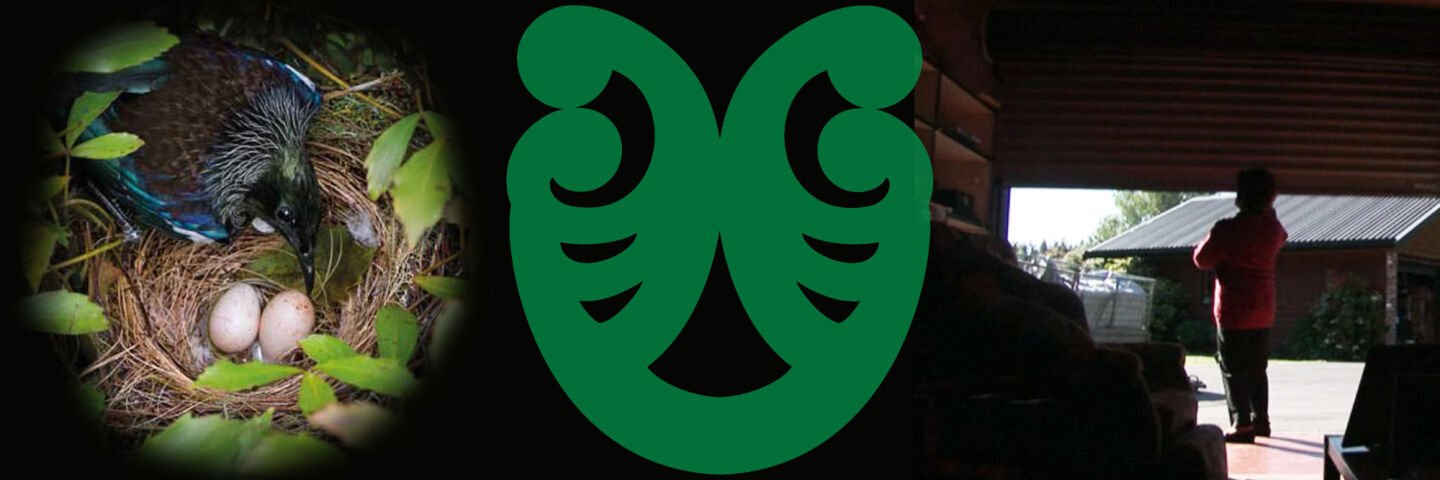


Te Kōhanga Reo early childhood centres work to build rich language and cultural spaces alongside whānau (extended family/community) in New Zealand. Many centres started by gathering in garages around the country in the early days and it was a long road for the educational movement to be recognised as a valuable educational resource in New Zealand.
The first Kōhanga Reo opened in Wainuiomata, Wellington in April 1982. In the year following, 112 Te Kōhanga Reo were opened and operational throughout the country. Since then, more than 50,000 children have attended a Kōhanga Reo. Many of those children are now parents of the second generation of Kōhanga Reo children.
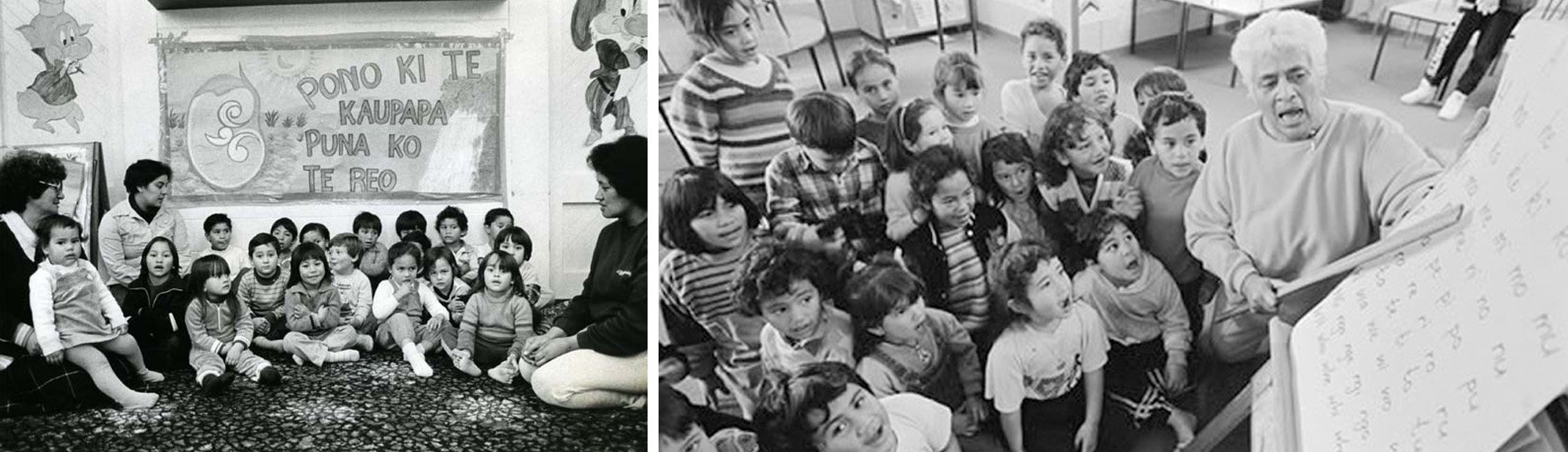
Dame Iritana Te Rangi Tāwhiwhirangi (Ngāti Porou, Ngāti Kahungunu and Ngāpuhi descent) is a New Zealand advocate of Māori language education and a founder of the Kōhanga Reo movement. During the 1970s and 1980s concern grew among Māori that te reo (the language) was becoming endangered. Māori Affairs chief executive Dr Kara Puketapu introduced the philosophy of Tū Tangata (stand tall) in an effort to revitalise the reo, calling on the help of Tāwhiwhirangi and others to look to their own people’s ways for an answer to their concerns.
“Family: that is the beginning, that is the essence, that is what it’s all about,” says Iritana Tāwhiwhirangi in the film Let My Whakapapa Speak (2008) By Tainui Stephens. “The culture of different people is their heartbeat. It’s their very existence. If you’ve grown up in a culture, then you are imposed upon by another culture, then things go wrong.”
Te Kōhanga Reo was established in essence, to bring fluent-speaking elders together with their mokopuna (young people) and their parents, following the Māori model of whānau development.
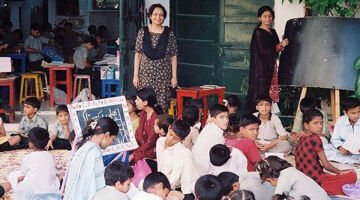
Derived from observations of mother tui nurturing and talking to babies in their Kōhanga (nest), Te Kōhanga Reo means 'the language nest' where tamariki (children) are cared for and nurtured in a warm and secure environment alongside the whānau (wider family). Tamariki in Kōhanga are totally immersed in the Māori language, kaupapa (customs and values) and Tikanga Maori (protocols), from birth to six years.
Children at Kōhanga learn to live and thrive alongside their elders, with one of the goals being to whet tamariki appetite for learning, so that when they go to school they are ready. Older children are given responsibilities towards younger and vice versa so everyone works together as a family from a basis of love. “Love for the kaupapa, the language and each other,” says Tāwhiwhirangi.
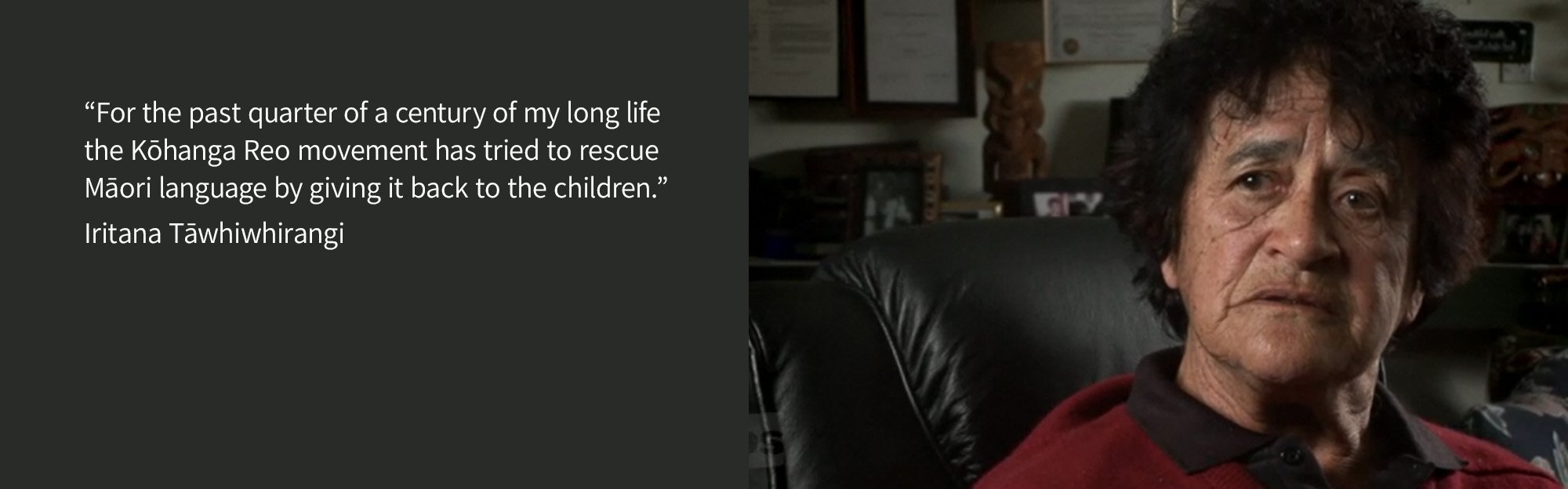
Image from the 2008 film 'Let My Whakapapa Speak' (2008) By Tainui Stephens. Dame Iritana Tawhiwhirangi received a DNZM for services to Maori education.
An abridged timeline of Kōhanga reo key events
1980-81 Māori leaders came to realise that the government was not responsible for reviving the language; Māoridom had to do it themselves. Te Kōhanga Reo was born, with its purpose being to retain Māori language and culture for future generations.
“Do not wait for the education department to revitalise the language. It can’t be done! We Māori must all protect and nurture our language.” Henare Tuwhangai
1982 The very first Te Kōhanga Reo was opened at Pukeatua in Wainuiomata, Wellington. Four more government-funded Kōhanga Reo followed quickly in Waiwhetu, Kōkiri Seaview and Maraeroa, in Wellington, and Orakei in Auckland.
1982–83 The National Te Kōhanga Reo Trust was set up, with a small secretariat paid for by Māori Affairs, to encourage whānau groups to establish and operate kōhanga reo.
1995 Two teaching courses were approved by the New Zealand Qualifications Authority. Te Whāriki Professional Development Programme Te Ara Tuatahi o Te Kōhanga Reo (Level 2) and Te Ara Tuarua o Te Kōhanga Reo (Level 5). Both are one-year courses.
2001 Dame Iritana Tawhiwhirangi receives a DNZM for services to Māori education.
2008 Kōhanga Reo was declared not eligible for the 20 hours of free funding that was granted to childcare centres across Aotearoa in 2007.
2009 The new National Government announces that all Kōhanga Reo will be eligible for 20 hours of free education per week from 1 July 2010.
2019 The Prime Minister’s Awards for Education Excellence were announced with two Kōhanga Reo in the finals: Te Kōhanga Reo ki Rotokawa (Waiariki) and Te Kōhanga Reo o Tari Mano (Waiariki).
2019 The ECE Census counted 444 kōhanga reo in New Zealand, representing about 10 per cent of all children in early childhood education. Kōhanga reo is the highest employer of Māori people in any early childhood service. Source: https://www.kohanga.ac.nz/en/
Find your closest Kōhanga

SOURCES:
https://tetai.nz/en/te-mana-o-te-reo-maori-Iritana-Tawhiwhirangi
https://en.wikipedia.org/wiki/Iritana_T%C4%81whiwhirangi
Back to articlesRelated Articles