Gary's road to release - our sponsored kiwi hatchling returns home.
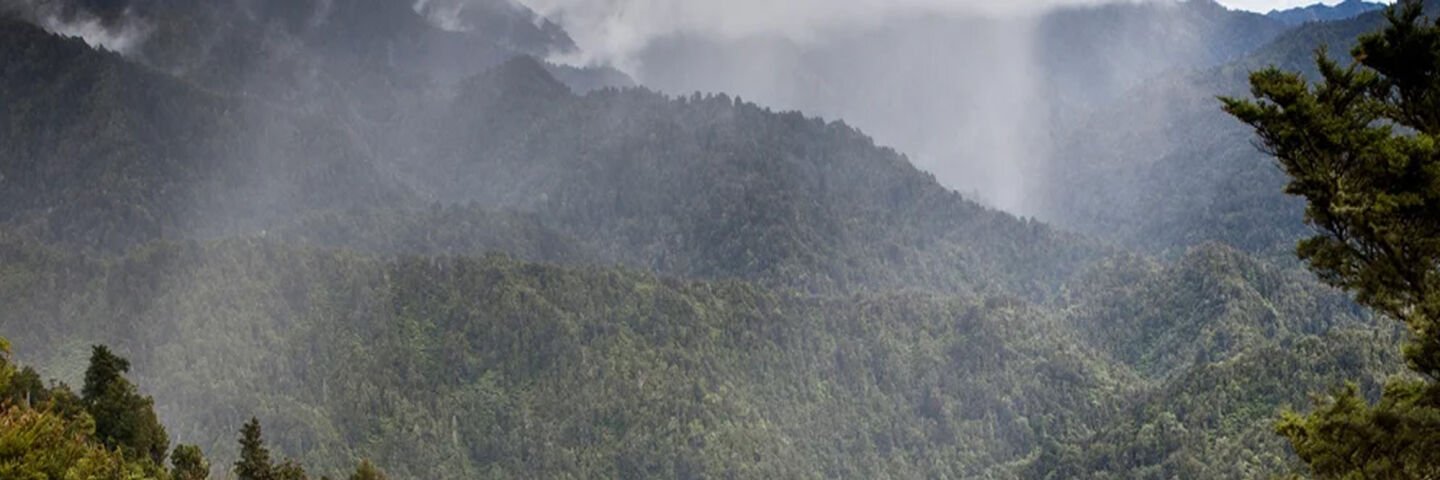


Have you been following along with the story of Garador's sponsored kiwi hatchling, Gary? After breeding at the National Kiwi Hatchery and care at Napier's Westshore Kiwi Creche, Gary has been released to his forever home in the Maungataniwha forest.
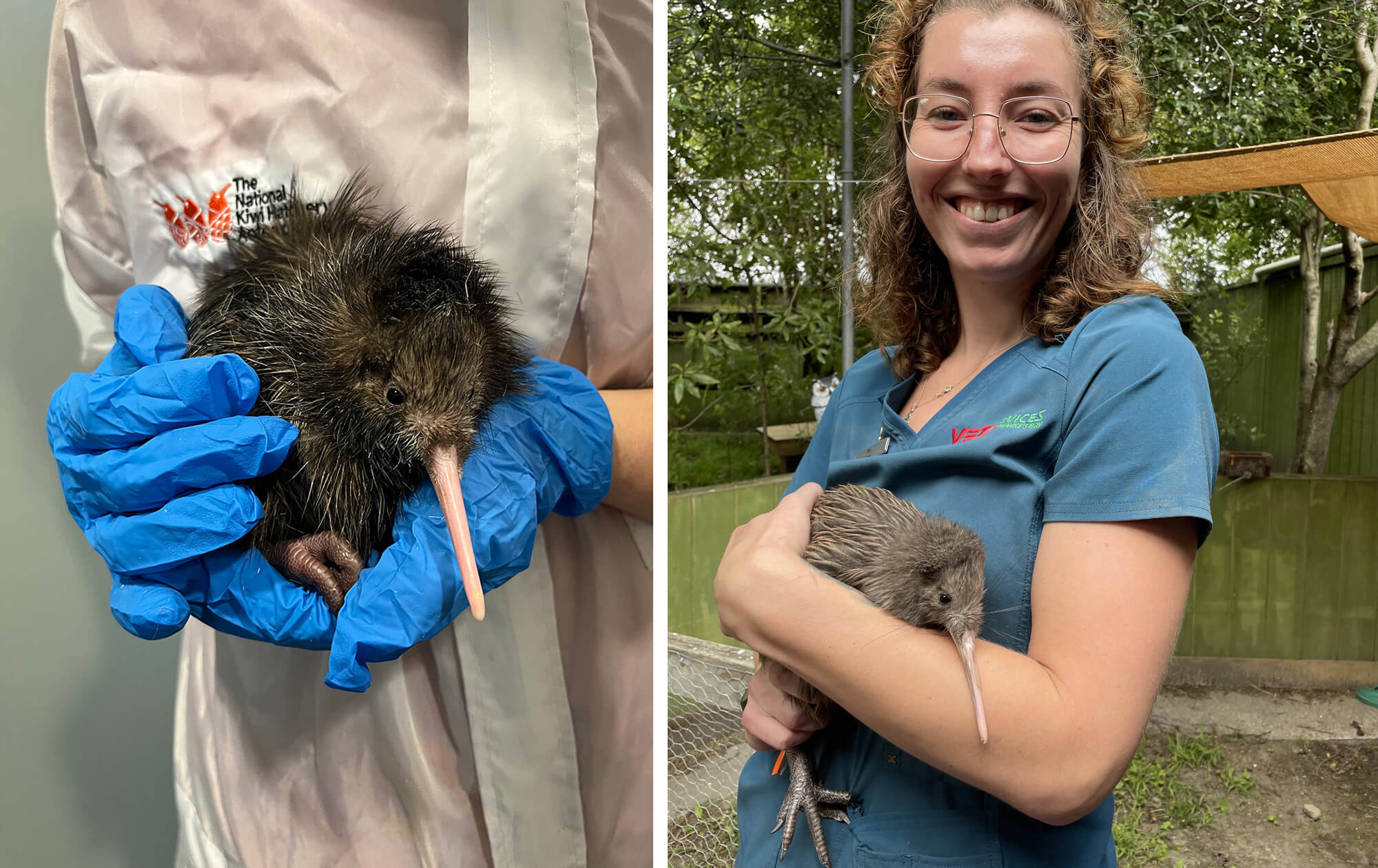
Above, left: Gary as a new hatchling in September 2022; right: Gary just before release in January 2023 with volunteer trainee vet nurse, Bex.
We first met Gary in 2022 as an egg, bred at the National Kiwi Hatchery in Rotorua. Fun fact: Kiwi have one of the largest egg-to-body weight ratios of any bird. The egg averages 15% of the female's body weight (compared to 2% for an ostrich).
The egg's identification code was Mt.Chr16 (being from the Maungataniwha forest, Sired by Charlie and the 16th egg from that male).
As we waited for the huge but volatile egg to develop and hatch, we ran a naming competition on our Facebook and Instagram pages, which resulted in some wonderful name suggestions. We settled on 'Gary' and named our cartoon kiwi mascot to match.
Gary hatched on 23 September, weighing in at 347g. After being cared for at the National Kiwi Hatchery for the first few weeks, in October 2022 Gary was released to Napier's Westshore Kiwi Creche.
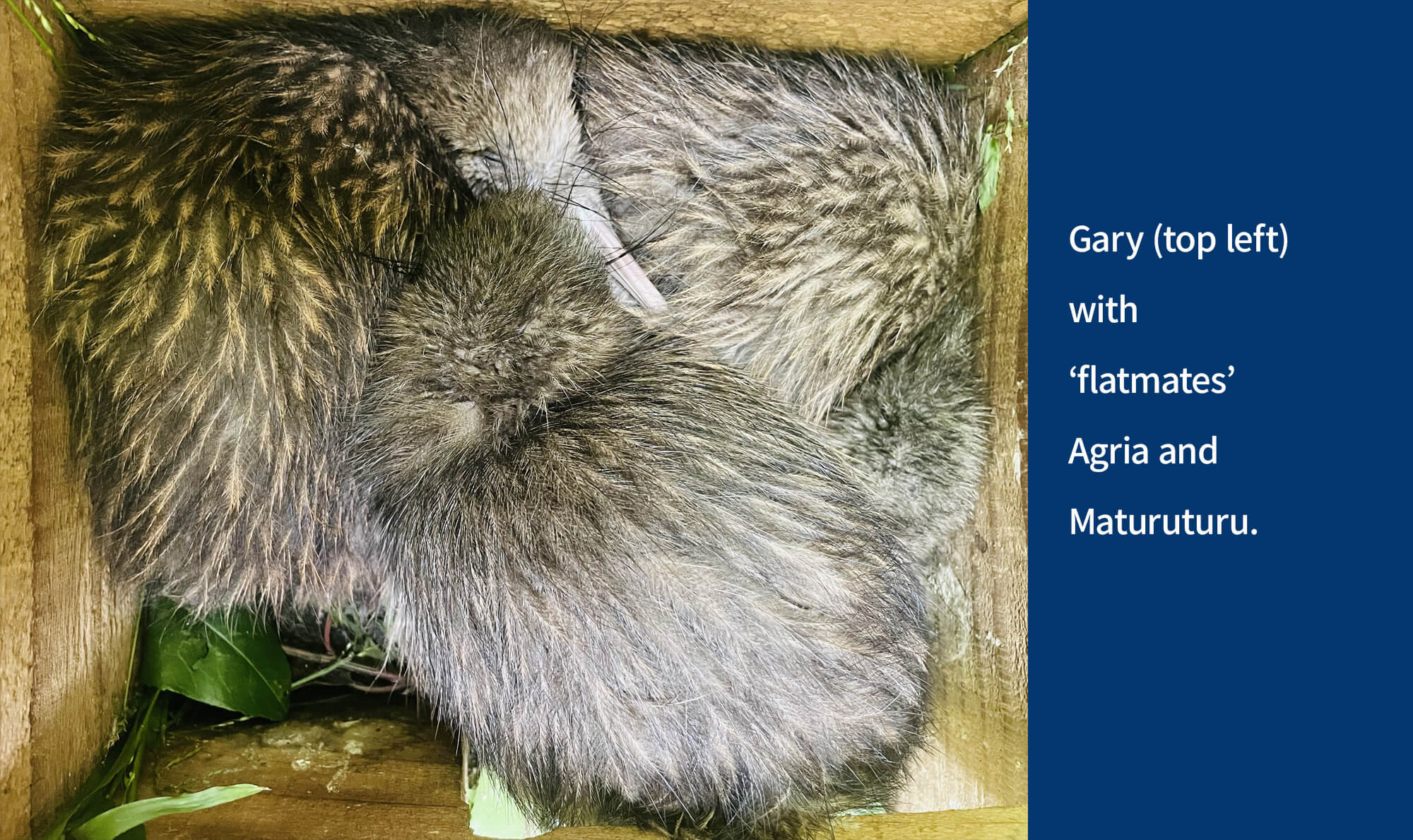
While at Westshore, Gary flatted with two other chicks in a new purpose-built run. Gary's hatchling flatmates' names are Agria and Maturuturu. They all lived very happily together in run 23. Gary was always the lightest in weight of the three flatties.
Always full of antics, Gary surprised the care team one morning, emerging with a piece of fibrous plant material wrapped quite tightly around the lower mandible. The team surmised that Gary must have found something exciting in the ground and while twisting and probing to retrieve it, got the material stuck around his bill.
Gary's abundant new feathers are a beautiful coppery colour with blonde tips.
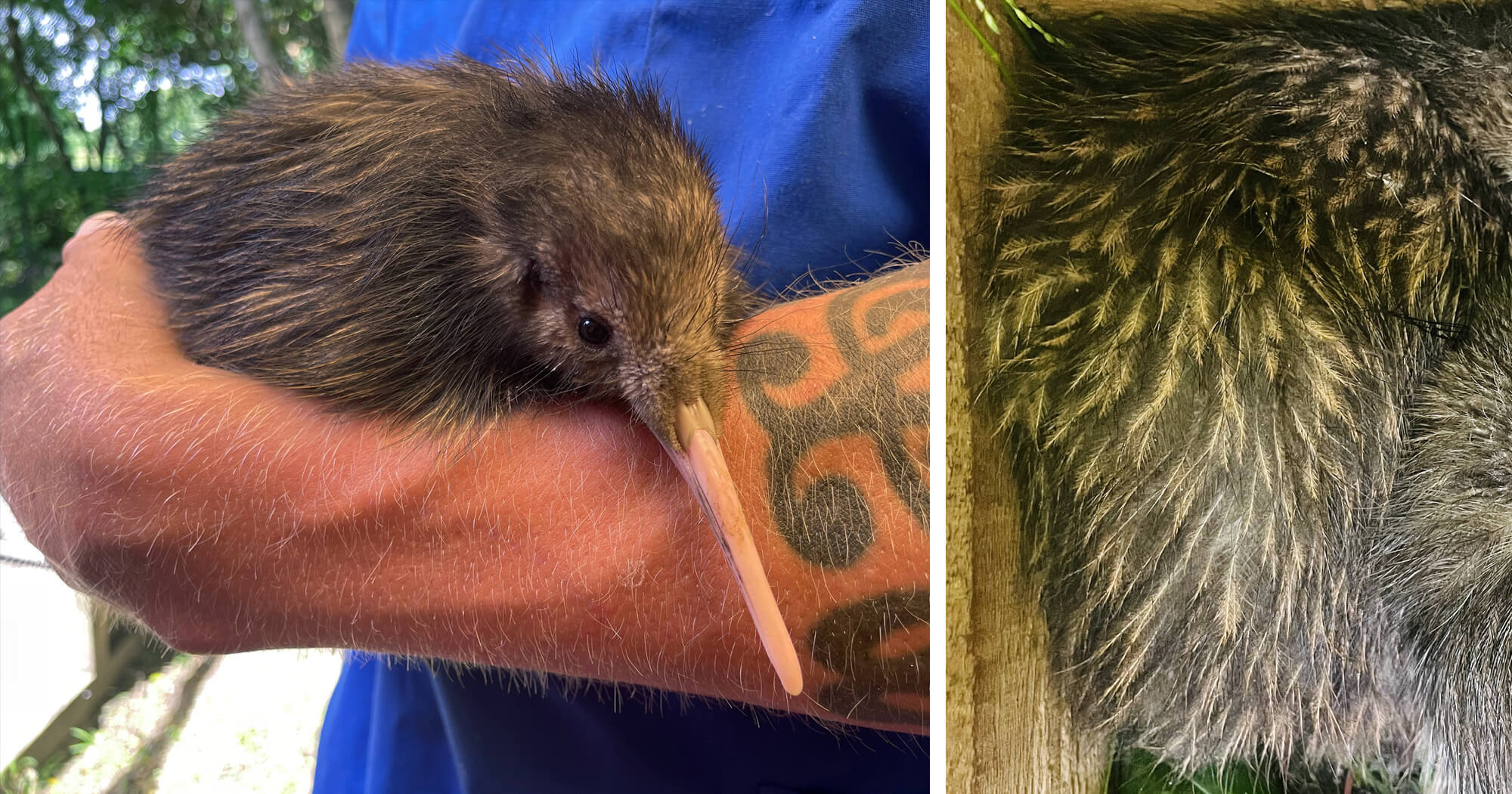
Look at the difference in Gary's feathers between November (above, left) and January (above, right). A beautiful furry texture has developed.
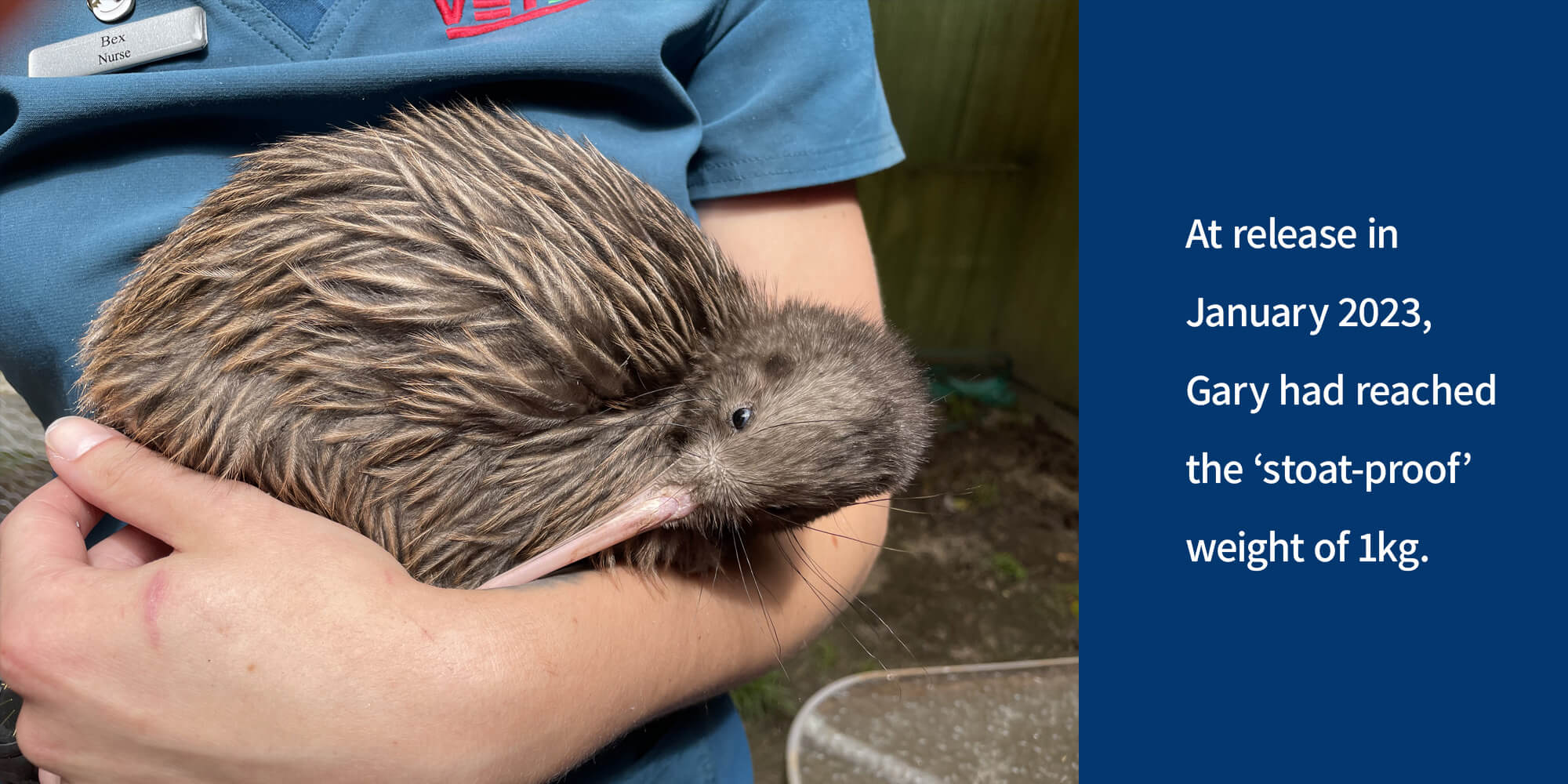
Gary passed all the pre-release tests with good results, reaching the "stoat proof" weight of 1kg in January this year. After being dosed for ascarids (intestinal parasites or worms) Gary was ready for release.
On 20.1.23, Garador's sponsored kiwi was released back to his origins in the Maungataniwha forest in northern Hawkes Bay to live his life as it was meant to be. Kia ora Gary!
Did you know these kiwi facts?
- The kiwi is truly unique. It is a bird and has tiny wings but cannot fly.
- The features of a kiwi are more characteristic of a mammal.
- The kiwi has loose feathers that are quite like fur. Unlike other birds, kiwi feathers moult throughout the year.
- The kiwi is the only bird in the world with nostrils at the end of its beak.
- Kiwi are never fed by their parents. They start to self-feed at around 5 days old.
- Kiwi take 3 - 5 years to reach adult size.
- A kiwi has no tail feathers, but does have whiskers, like a cat.
- A kiwi has marrow in its bones, just like a human.
- Very unusually, female kiwi have two ovaries, whereas most birds have only one.
Related Articles